

 Christmas Tours in London: Discover Dickensian London Beyond the Christmas Lights
 Christmas Tours in London: Discover Dickensian London Beyond the Christmas Lights
London does Christmas on a large scale, which is exactly why planning a visit can feel like a lot. There are lights to see, markets to browse, ice rinks to book and, underneath it all, an older story about how the festival became what it is today.
Most Christmas tours in London fall into one of three kinds: lights tours by bus or car, guided walks and rides built around a historical theme, and event-led outings such as ice skating. This guide concentrates on the middle kind, and on Charles Dickens in particular. It explains what “Dickensian London” means, separates Victorian fact from modern tradition, and describes the festive places worth knowing, including the stops on FOF Bike Tours’ Christmas e-bike route.
Why Take a Christmas Tour in London?
A guided Christmas tour takes the guesswork out of a very busy season. Rather than choosing between dozens of light displays, markets and attractions, you follow a route someone has planned and hear why the places you pass are worth a look.
What kinds of Christmas tours are there in London?
A Christmas tour is a great way to experience London’s festive atmosphere while learning more about the city’s history. Rather than visiting attractions without context, a guided experience connects the places you see with the stories behind them.
There are several types of Christmas tours in London:
- Christmas lights tours: Explore illuminated streets, decorated shopping areas and spectacular seasonal displays.
- Walking and cycling tours: Discover historic neighbourhoods, traditional markets and local stories at a more relaxed pace.
- Festive experiences: Enjoy seasonal activities such as ice skating, Christmas markets and special events.
A Christmas lights tour focuses mainly on the displays, while a Dickens-themed tour explores the people, places and traditions associated with Victorian Christmas.
If you enjoy literature, history and discovering London’s character beyond its famous lights, a Dickens-inspired experience offers another way to enjoy the season.
What Makes Dickensian London Special at Christmas?
“Dickensian London” means the city Dickens lived in and wrote about: a Victorian capital of counting-houses, crowded markets and river trade, with sharp contrasts between wealth and poverty. At Christmas, those contrasts sit at the centre of his best-known story.
A city of contrasts
When Dickens wrote A Christmas Carol in 1843, he had first intended a political pamphlet on the plight of working children. The story he wrote instead sets a miserly City businessman against both the warmth of family Christmases and the hardship outside the door. That social purpose is why the story feels like more than a festive fable, and why “Dickensian” suggests hardship as much as firelight.
What survives of Dickens’s London
Much of Dickens’s city has been rebuilt, bombed or redeveloped, so Dickensian London today is a mixture: some surviving buildings, older street patterns and market sites, and a good deal of storytelling. The Charles Dickens Museum at 48 Doughty Street is the writer’s only surviving family home in London, and he lived there from 1837 to 1839.
Charles Dickens and the Christmas Traditions We Know Today
Charles Dickens did not invent Christmas, but he helped change how Britain thought about it. Christmas was celebrated long before 1843. What Dickens did was give the festival a powerful story about family, generosity and responsibility to others, at a moment when interest in the season was already growing.
Christmas before the Carol
By the 1830s, older Christmas customs were being collected and revived. The Victorian Web points to books such as William Sandys’ collection of carols (1833) and Thomas Hervey’s The Book of Christmas (1837) as part of that revival. Dickens wrote into a moment of renewed interest rather than starting from nothing.
What A Christmas Carol did
A Christmas Carol was published on 19 December 1843, after Dickens wrote it in about six weeks. The first print run of 6,000 copies sold out within days, and the book has never been out of print. It was illustrated by John Leech, and a contemporary magazine, The Gentleman’s Magazine, credited it with a rise in charitable giving in early 1844. That is a contemporary view rather than a measured result, but it shows how the story was received: as a call to generosity, not just a ghost story.
Victorian Christmas traditions: who gets the credit?
Several customs people link with Dickens were Victorian developments with other origins:
- Christmas trees. Prince Albert is usually credited with popularising them in Britain, and an 1848 engraving of the royal family around a tree in the Illustrated London News helped spread the fashion. Dickens wrote a short piece called A Christmas Tree in 1850, but the tree does not feature in his Christmas books.
- Christmas cards. The first commercially produced card was commissioned in 1843 by Henry Cole, later the first director of the Victoria and Albert Museum. Cards became a mass habit over the following decades, with no particular help from Dickens.
- Christmas crackers. Created by the sweet-maker Tom Smith in the 1840s, inspired by French sweets wrapped in twists of paper.
So Dickens shaped the spirit of the modern Christmas more than its objects. Even the snowy Victorian Christmas of greetings cards is partly a later image: the biographer Peter Ackroyd has called it something of an accident of history, as the Victorian Web notes.
Festive Stops Along the Dickens Christmas London Tour
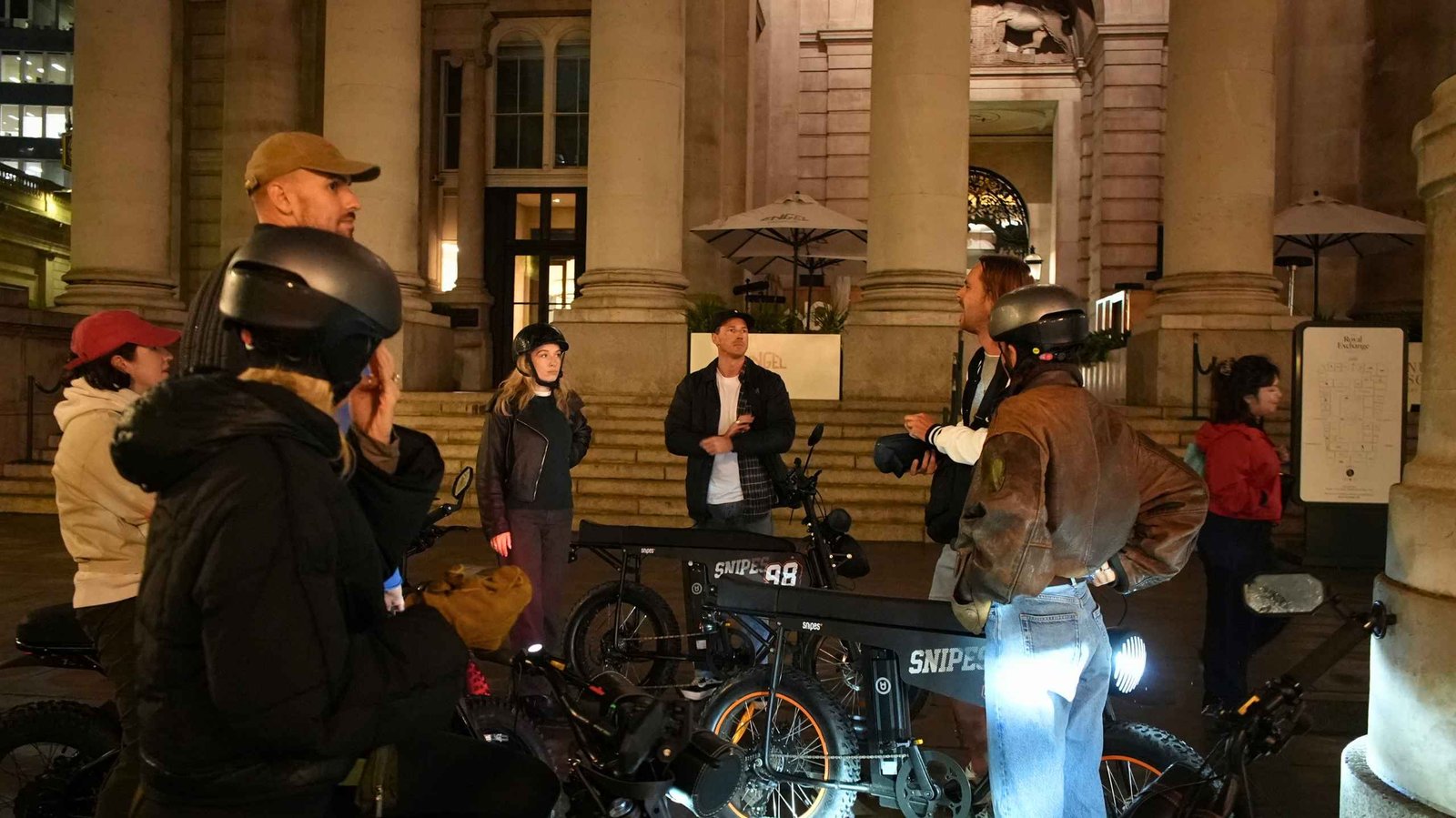
FOF Bike Tours’ Dickens Christmas e-bike route starts and finishes at the High Llama in Fitzrovia and passes nine stops in between: Dickens’ Homes, the Royal Exchange, Leadenhall Market, Brabant Court, the Monument, London Bridge and the Thames, Borough Market, Somerset House and Covent Garden. What follows is background on each place, to read as context rather than as a script of what a guide will say. Somerset House and Covent Garden have their own section after this one.
Dickens’ Homes and the Charles Dickens Museum
The route opens with places connected to Dickens’s own life, and FOF’s tour page shows guests outside the Charles Dickens Museum. Dickens lived at 48 Doughty Street as a young father at the start of his career, and the house shows that earlier Dickens rather than the national celebrity. The tour is an outdoor experience, so museum entry is not included. If you want to go inside, book separately: tickets are timed, and December opening hours differ from the usual pattern, so check the museum’s website first.
The Royal Exchange
The Royal Exchange stands for the commercial City that surrounds Scrooge. The current building, the third on the site, was opened by Queen Victoria on 28 October 1844, less than a year after A Christmas Carol appeared. It is a good place to think about the Victorian economy behind the story: trade, wealth, and the gap between those who had money and those who did not, which is Dickens’s central subject.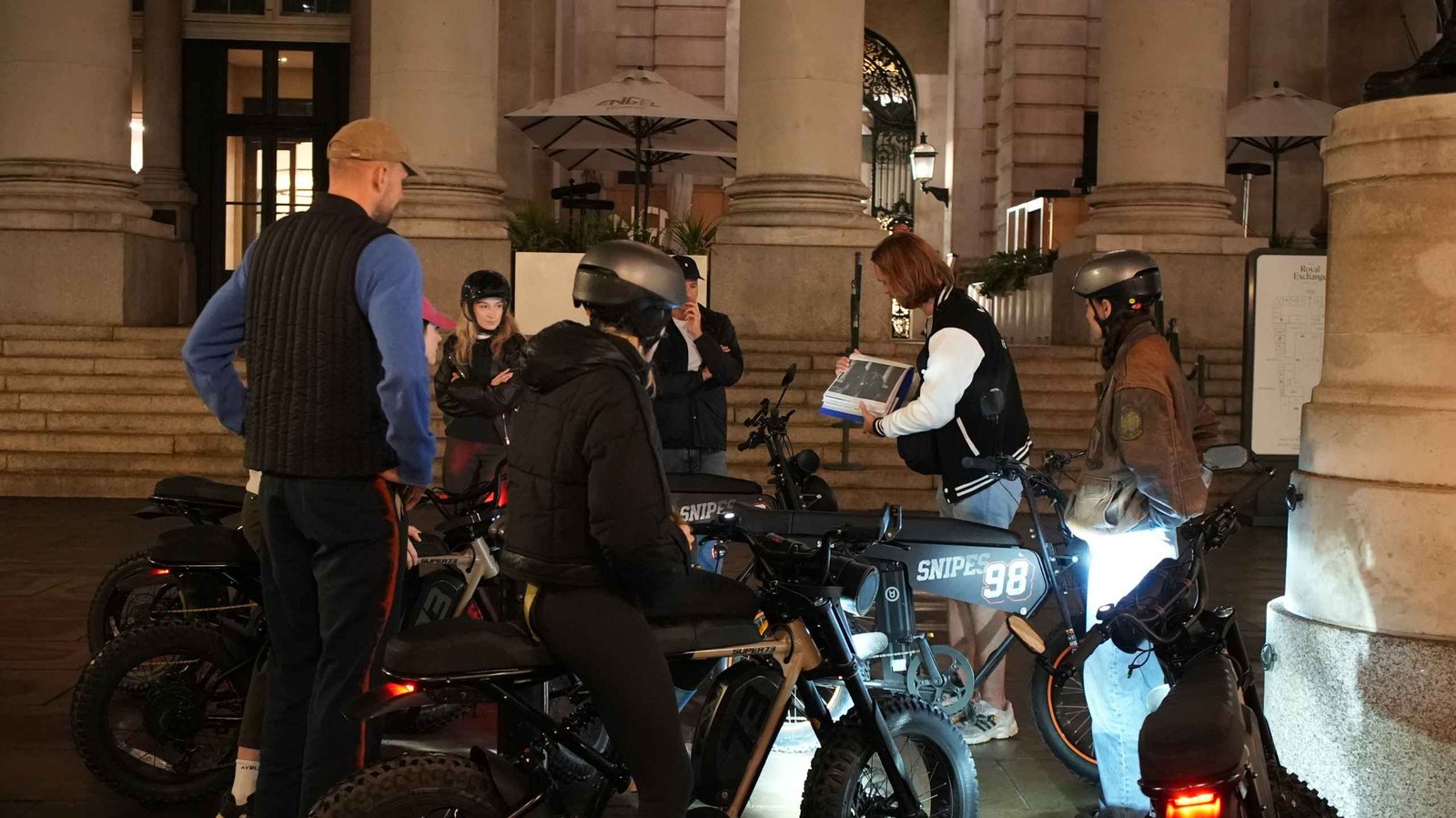
Leadenhall Market
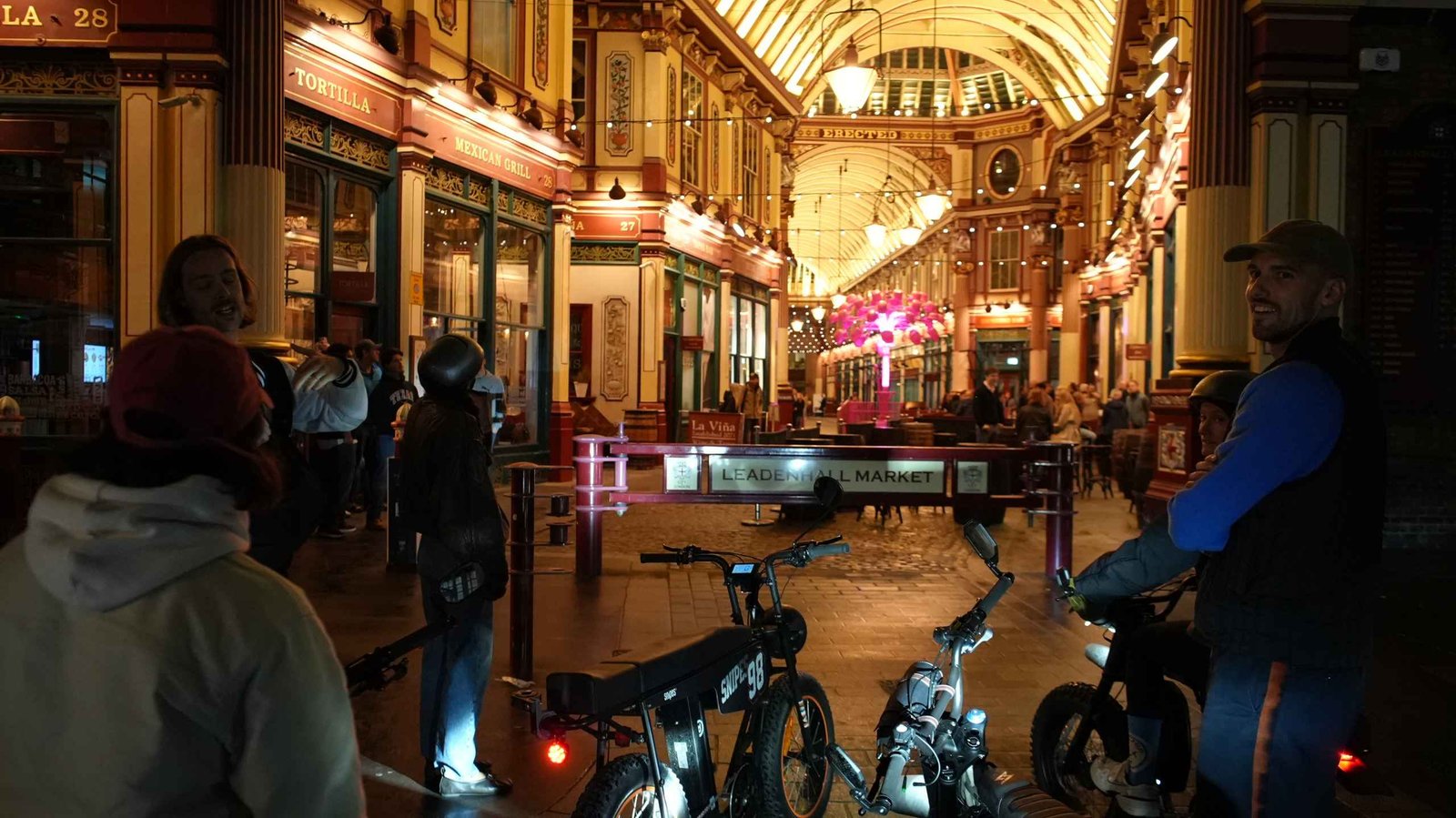
Leadenhall Market’s present wrought-iron and glass design dates from 1881, and the site is far older: the market says that Richard ‘Dick’ Whittington gave the earlier stone building to the City in 1411. It also notes that Leadenhall is thought to be the place where Scrooge sends a boy to buy a prize turkey for the Cratchits. The story itself does not name the market, so treat that as a popular association rather than documented fact.
Brabant Court
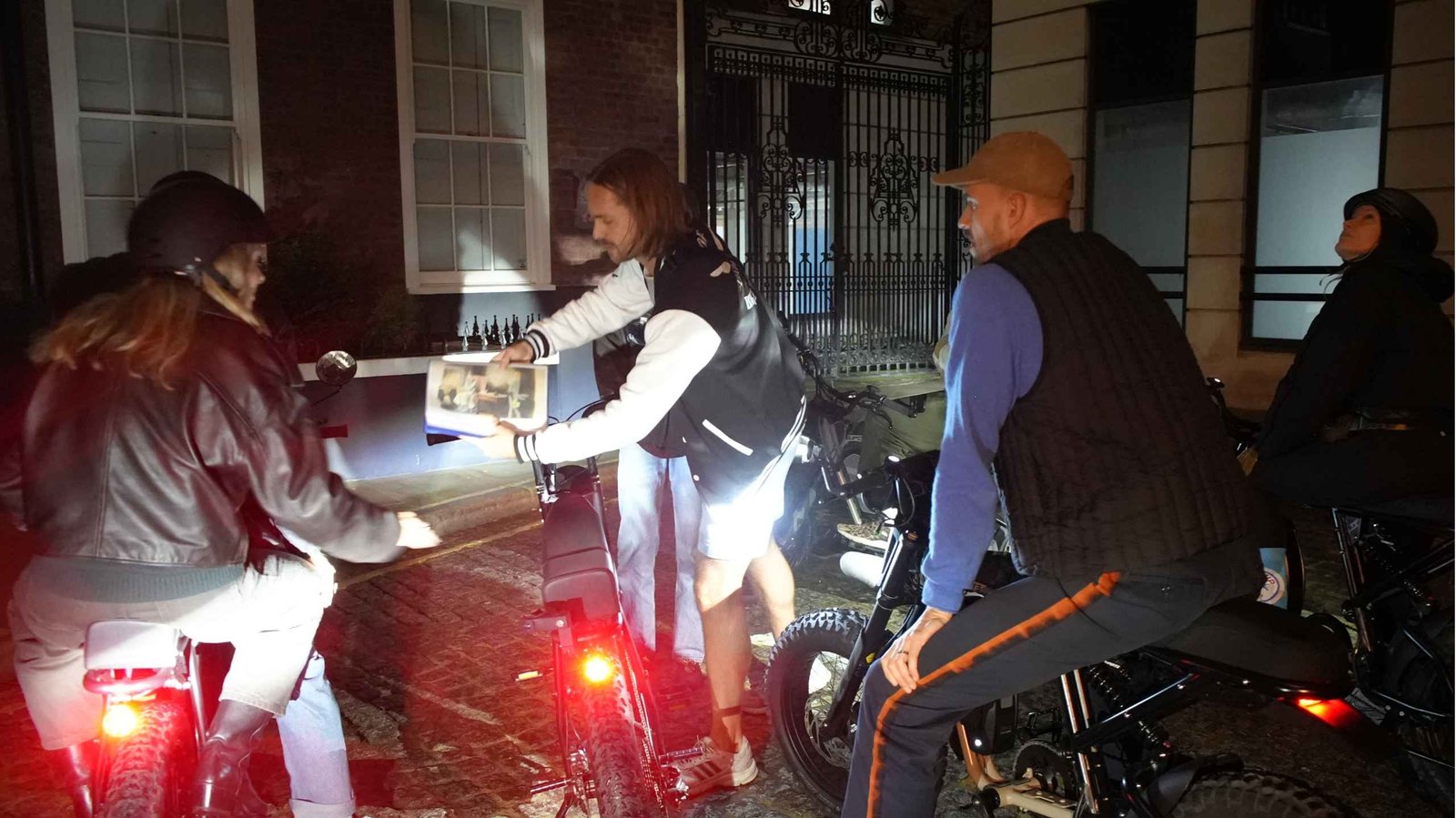
FOF’s tour page describes Brabant Court as a hidden corner of old London, and it is where the tour’s stories turn to the atmosphere of the city Dickens would have known. It is the least famous stop on the route, and a good reminder that much of Dickensian London lives in small places rather than grand landmarks.
The Monument
The Monument commemorates the Great Fire of 1666. It is 202 feet tall, the same distance from the spot in Pudding Lane where the fire began, and it was built between 1671 and 1677 to a design by Robert Hooke working with Sir Christopher Wren. It features on FOF’s route for the story of destruction and rebuilding that it tells. The Monument commemorates the Great Fire of London in 1666 and remains an important landmark in the city’s history.
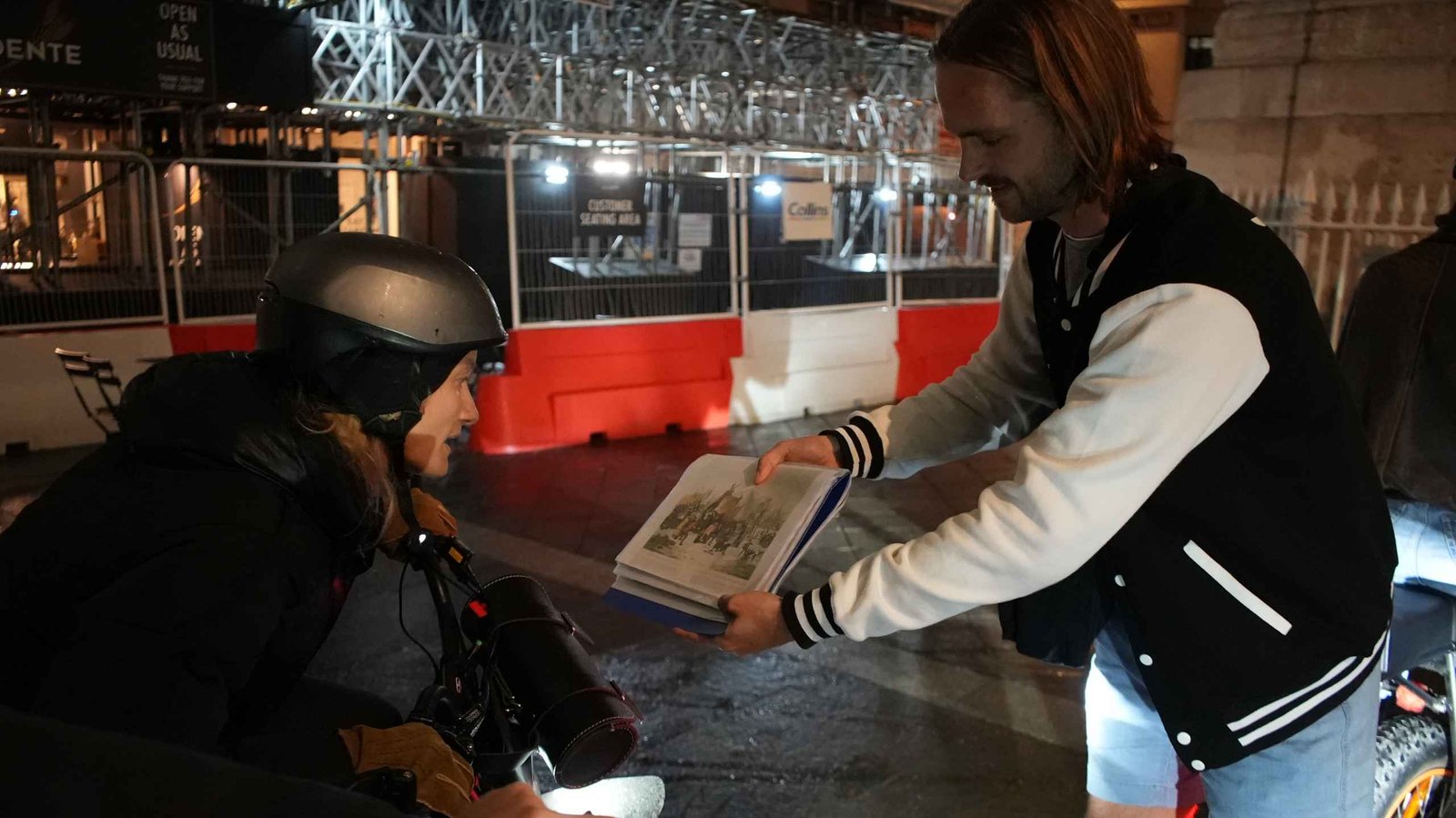
London Bridge, the Thames and Borough Market
The river was London’s main trade route, and the area around London Bridge shows how food, goods and people moved through the city. Borough Market describes its history as stretching back around a thousand years; it moved to its present site in 1756, and a railway viaduct was driven through it in 1862. Dickens knew this neighbourhood: the Marshalsea debtors’ prison, where his father was held and which he used as the setting for Little Dorrit, stood on nearby Borough High Street. Today Borough Market is a year-round food market that adds festive specials and decorations in December. Entry is free, and opening hours change around Christmas, so check the market’s website.
Covent Garden, Somerset House and London’s Christmas Atmosphere
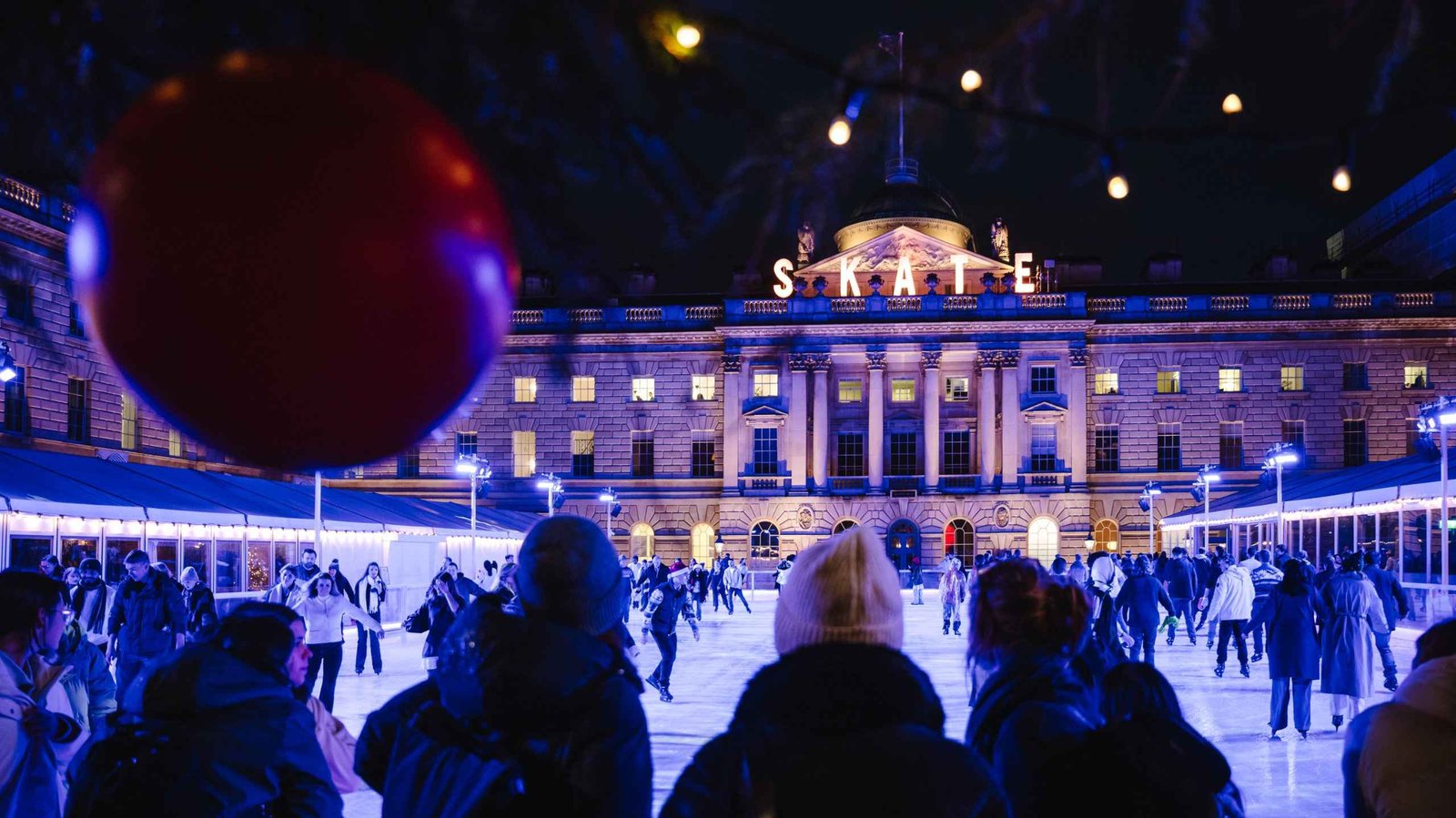
The route finishes at two of central London’s best-known festive locations: Somerset House and Covent Garden. Both offer a distinctive Christmas atmosphere and a glimpse of the historic city that makes London special during the festive season.
Somerset House
Somerset House has a connection to Charles Dickens’s family history. In 1822, his father, John Dickens, was recalled to work at the Navy Pay Office associated with Somerset House. Today, the building is also known for its festive atmosphere, making it a memorable location to discover while exploring London at Christmas.
Covent Garden
Covent Garden is known for its Christmas decorations, festive lights and large Christmas tree. Its historic Market Building and Piazza create a lively seasonal atmosphere, making it a popular place to experience Christmas in central London. The area also has a connection to Dickens’s early theatrical ambitions and literary career.
Christmas markets: what to expect
People searching for Christmas markets in London often mean one of two things: seasonal pop-up markets with stalls, such as Winter Wonderland, or historic markets that dress up for the season. Leadenhall Market and Borough Market belong to the second group. They are old trading places with festive decoration and seasonal food, not stall-based Christmas fairs. Both are worth seeing, but it helps to know which you are getting.
Why Explore Christmas London by E-Bike?
An e-bike lets you link festive places that are several kilometres apart in a single outing, without the effort of pedalling hard, and you can stop wherever there is something to hear or see. The trade-off is that you are outdoors in a London winter.
The City, the river and the West End sit well apart, which is why a bike suits a route that runs from Leadenhall Market to Covent Garden. The Dickens Christmas London e-bike tour from FOF Bike Tours covers that ground in about 2.5 hours, with guided stops along the way. A bus covers the distance but rarely stops, and walking allows stops but would take far longer to cover the same ground.
Is an e-bike tour a good way to explore London at Christmas?
It suits people who enjoy being outdoors, want to see several areas in one outing and like learning as they go. It is less suitable if you want to stay warm and seated all evening, or if you would rather not ride in a busy city after dark. Darkness falls mid-afternoon in December, which is good for lights and means that dressing warmly matters. FOF’s tour page lists an optional waterproof poncho and an optional helmet among the inclusions.
Book the Dickens Christmas London E-Bike Tour
FOF Bike Tours’ Christmas experience combines the history above with a guided e-bike route. The tour page describes it as a limited Christmas experience, so check availability for your dates. What the page confirms:
- Duration: about 2.5 hours, as a public tour
- Route: starts and finishes at the High Llama, with stops at Dickens’ Homes, the Royal Exchange, Leadenhall Market, Brabant Court, the Monument, London Bridge and the Thames, Borough Market, Somerset House and Covent Garden
- Included: a premium e-bike, optional helmet, optional waterproof poncho, a bottle of water and a local guide
- Not included: entry to the Charles Dickens Museum
- Riders: age 14 or over to ride your own e-bike, with a recommended minimum height of 5 ft 3 in (160 cm); children under 14 can ride with an adult on the same bike if the combined weight does not exceed 150 kg
- Meeting point: High Llama Bakery & Deli, 38 Riding House Street, London W1W 7ES; arrive 10 minutes before your tour time
For dates, prices and booking, visit the tour page and explore London on a Dickens-themed Christmas e-bike tour. If you would like to compare options first, see all FOF e-bike tours.
Christmas in London works on several levels. You can enjoy the lights for their own sake, or use them as a way into a longer story: of a writer who turned his anger about child poverty into a book, of a Victorian city changing fast, and of customs that were invented, revived and borrowed long before the version we recognise today. Whichever kind of Christmas tour you choose, check the dates, dress for the weather and leave time to stop and look.
0 Comments